Laser Tattoo Removal in Lethbridge, Alberta
If you’re looking to say goodbye to an old tattoo, laser tattoo removal could be the perfect solution. At Lethbridge Plastic Surgery, we use advanced laser technology to gently break down the ink, leaving your skin looking clearer and fresher. Each treatment targets the ink directly, breaking it down into smaller particles that your body absorbs naturally, and most people see significant fading after just a few sessions. The goal is clearer skin with minimal downtime so you can feel more confident and ready for your next chapter.
Here’s How Laser Tattoo Removal Works
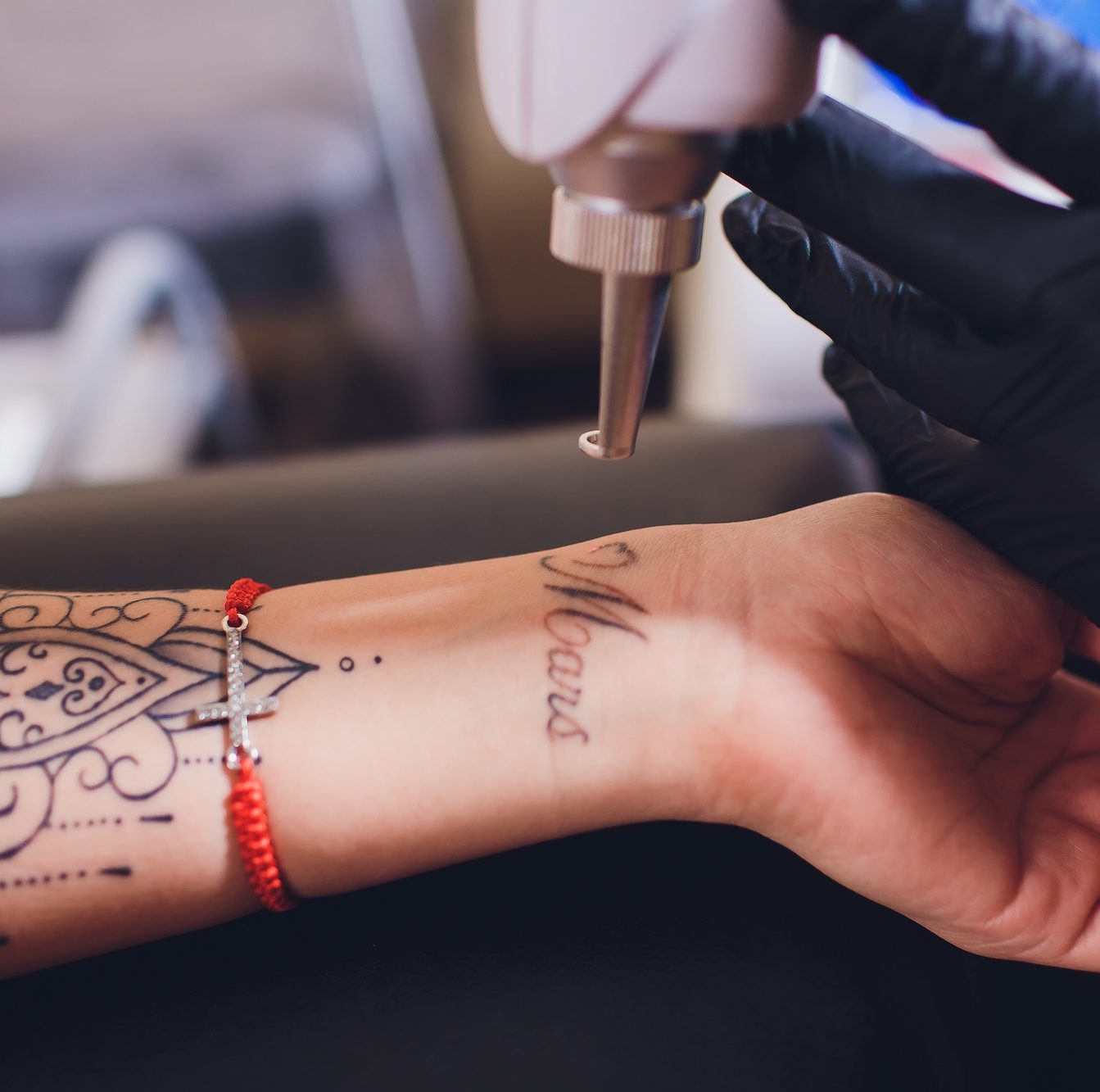
Our laser tattoo removal procedure uses advanced technology to target and break down the ink in your tattoo. The laser sends light pulses that are absorbed by the ink particles, breaking them into smaller pieces that your body naturally eliminates over time. This precise and controlled process helps make sure that the surrounding skin remains unharmed while the tattoo fades away gradually.
While multiple treatments may be needed to achieve optimal results, the sessions are quick and effective, with minimal discomfort. The number of treatments depends on factors like tattoo size, color, and ink depth, but most people notice significant fading after just a few sessions. Your personalized treatment plan will help make sure that you get the best outcome with as little downtime as possible.
What Does Laser Tattoo Removal Treat?
Laser tattoo removal can help with a wide range of tattoos, from small, delicate designs to larger, more intricate pieces. Whether it’s a name, symbol, or a colorful design, the treatment is versatile and effective for removing various types of ink.
This treatment can help with:
What to Expect Before, During, and After Treatment
Before your laser tattoo removal session, we’ll have a consultation to assess your tattoo and create a personalized treatment plan. The process is quick and minimally uncomfortable, with most people experiencing only mild sensations during the treatment. Afterward, your skin may be slightly red or swollen, similar to a mild sunburn, but this fades quickly. With a few sessions, your tattoo will gradually fade as your body naturally eliminates the broken-down ink.
What to Expect:
We’re Answering All Your FAQs About Laser Tattoo Removal
The number of sessions you’ll need depends on several factors, including the size, color, age, and depth of your tattoo. Most people require between 6 to 10 sessions spaced several weeks apart for the fading to be complete or at least near-complete.
Keep in mind that some tattoos may fade significantly in fewer treatments, while others, especially colorful or densely inked ones, may take longer. During your consultation, your provider can give you a more personalized estimate.
In many cases, laser tattoo removal can fade a tattoo to the point where it’s barely noticeable or pretty much invisible. However, complete removal isn’t guaranteed for everyone, especially for tattoos with bright or resistant ink colors like teal or yellow.
In the end, the results depend on your skin type, the ink used, and how your body responds to the laser. Even if some faint traces remain, the tattoo often becomes dramatically less visible.
A typical session lasts between 15 to 30 minutes, depending on the size and complexity of your tattoo. Smaller tattoos can be treated in just a few minutes, while larger pieces may take a bit longer.
You’ll also want to allow time for pre-treatment care and post-session instructions. The sessions are quick enough to fit into a busy day but spaced out for safe and effective healing.
Tattoos that are older, professionally applied, or use darker ink tend to respond better to laser removal. On the other hand, tattoos with vibrant colors, dense shading, or layered cover-ups can be more resistant.
Your skin tone, location of the tattoo, and your body’s ability to break down ink particles also play a role. The good news is that modern laser technology is more effective than ever, even on complex tattoos.
Laser tattoo removal is generally safe when performed by trained professionals, but like any skin procedure, there are risks. Mild redness, swelling, or blistering can occur temporarily after a session.
To reduce the risk of infection or scarring, it’s essential to follow proper aftercare instructions, including keeping the area clean and avoiding sun exposure. With good care, long-term complications are rare, and scarring is uncommon.